In Torryburn, Fife, "The Witches Tower" refers to a B-listed 17th-century tower house on the Craigflower Estate, recently restored into a private home. It stands as a testament to the village's complex history—serving both as a fortified residence and as a symbol of one of Scotland's darkest chapters: the persecution of innocent women during the witch trials.
The Tower & Memorial
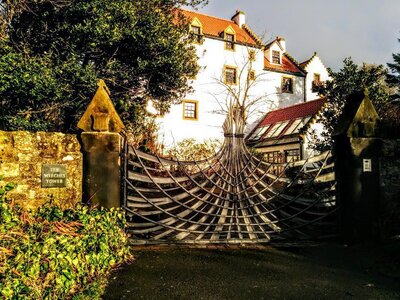
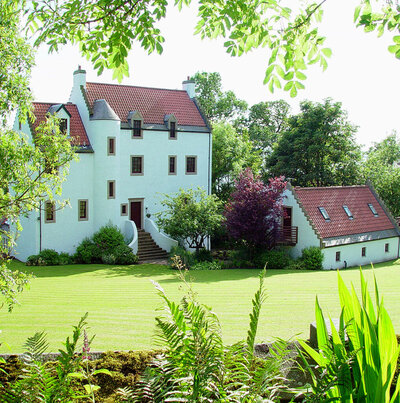
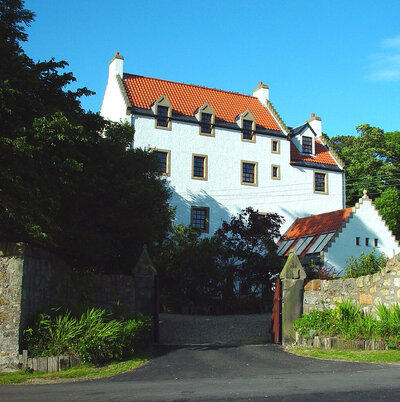
The Craigflower Tower: Architecture & Restoration
A Fortified Tower House
Located near the Low Causeway on the Craigflower Estate, this fortified tower house is a fine example of 17th-century Scottish defensive architecture. The tower reflects the practical needs of the period—security, durability, and command of the surrounding landscape.
The tower's B-listed status recognizes its historical and architectural significance within the context of Scottish heritage. It stands as a surviving example of residential tower architecture from this era, when such structures served as both homes and strongholds for landed families.
Modern Restoration
The tower has been fully restored by Yeoman McAllister Architects into a private dwelling, demonstrating how historic structures can be carefully adapted for contemporary use while preserving their character and integrity.
The restoration work respects the original architecture while introducing modern amenities and comfort—a model for heritage conservation in Scotland. The tower is listed on the Historic Environment Scotland Portal for its historical and architectural significance.
Torryburn & the Scottish Witch Trials
A Village at the Center of Persecution
In the early 1700s, Torryburn became the epicenter of brutal witch hunts. During this period of mass hysteria and religious fervor, innocent women were accused of witchcraft, imprisoned, tortured, and executed. The village's proximity to the coast, combined with economic hardship and superstition, created conditions for persecution.
The witch trials left deep scars on Scottish society. What began as accusations against a few individuals escalated into systematic persecution. Entire families were implicated; entire communities turned against their neighbors. The trials represent a dark episode in human history—one that reveals how fear, prejudice, and institutional power can combine to produce tragedy.
Lilias Adie: A Name We Remember
Among the victims of Torryburn's witch trials was Lilias Adie. In 1704, she was arrested on accusations of witchcraft. Like others accused, she was subjected to torture—a standard practice intended to extract confessions. Lilias Adie died in prison, never convicted, never tried in any formal sense.
But the persecution did not end with her death. Local authorities, fearing that her body might be reanimated by supernatural forces, buried her on the tideline—between the high and low water marks. This liminal space was considered appropriate for someone deemed dangerous even in death. The rectangular slab that marks her reputed grave site remains just off the beach, a physical memorial to her suffering and to the injustice she endured.
Lilias Adie represents countless women whose names have been lost to history, but whose stories deserve to be remembered. She was someone's daughter, perhaps someone's mother or sister. She was a person, not a witch.
The Witches Trail: Remembrance & Education
A Memorial Path Along the Coast
The Witches Trail, managed by the Fife Coast and Countryside Trust, is a memorial trail that traces the coastline from Culross to Torryburn. The trail commemorates the innocent women persecuted during the witch trial era and serves as a space for reflection on this difficult period of Scottish history.
Walking the trail, visitors encounter markers, information panels, and memorials that tell the stories of those accused and killed. The trail itself—a journey along the coast—invites contemplation. It transforms a historical narrative into a lived experience, allowing visitors to physically engage with the landscape where these events unfolded.
Education & Reconciliation
The Witches Trail and memorials like Lilias Adie's grave marker represent efforts to educate the public about Scottish witch trials and to acknowledge historical injustice. These initiatives serve multiple purposes:
- Historical accuracy: Separating fact from legend, understanding the real people behind the accusations
- Justice: Acknowledging the suffering of victims and the failures of institutions that persecuted them
- Prevention: Learning from history to recognize and resist similar patterns of persecution and scapegoating
- Community healing: Allowing communities to process and move beyond historical trauma
The Witches Tower in Craigflower's Story
The Witches Tower sits within the larger story of Craigflower Estate. While David Bryce's 1860 mansion dominates the architectural landscape, the 17th-century tower speaks to an earlier period of Scottish history—one of fortification, survival, and community.
The tower's presence on the estate links Craigflower to the broader history of Torryburn and Fife. It reminds us that the grounds where boys played cricket and rugby in the 20th century held significance for centuries before—as a defensive structure, as a home, and as a site of regional importance.
Today, both structures—the medieval tower and the Victorian mansion—represent different eras and different purposes. Together, they tell a more complete story of Scottish heritage, from medieval fortification through Victorian architectural achievement to modern heritage conservation.
Learning More
To learn more about the witch trials in Scotland and the stories of those persecuted:
- Fife Coast and Countryside Trust: Information about the Witches Trail and its memorials
- Historic Environment Scotland: Details about B-listed structures and heritage conservation
- Scottish Witch Trials Database: Academic resources documenting those accused and executed
- Local history societies: Community groups in Torryburn and Culross often organize walks and educational events
If you have memories, stories, or historical information related to the Witches Tower or Torryburn's history, please consider sharing them with us.